
VINYL ESTER RESINS
Vinyl Ester Resins
Vinyl ester resins are high-performance thermoset materials valued for corrosion resistance, toughness, and long-term durability in demanding environments.
Because we specialize in thermosets and thermoplastics, our engineering team can compare material options across both families—then align the right resin, reinforcement, and molding process to your performance and production goals.
Request a Material Consult → | Explore All Materials →
Why Choose Vinyl Ester?
|
Corrosion Resistance Ideal for moisture, salt, and chemical exposure environments. |
Toughness + Crack Resistance Helps parts withstand impact and fatigue over time. |
Durable Structural Performance Strong balance of mechanical properties for FRP components. |
Processing & Reinforcement Options
| Common Molding Processes |
Reinforcements & Additives
|
Technical Highlights
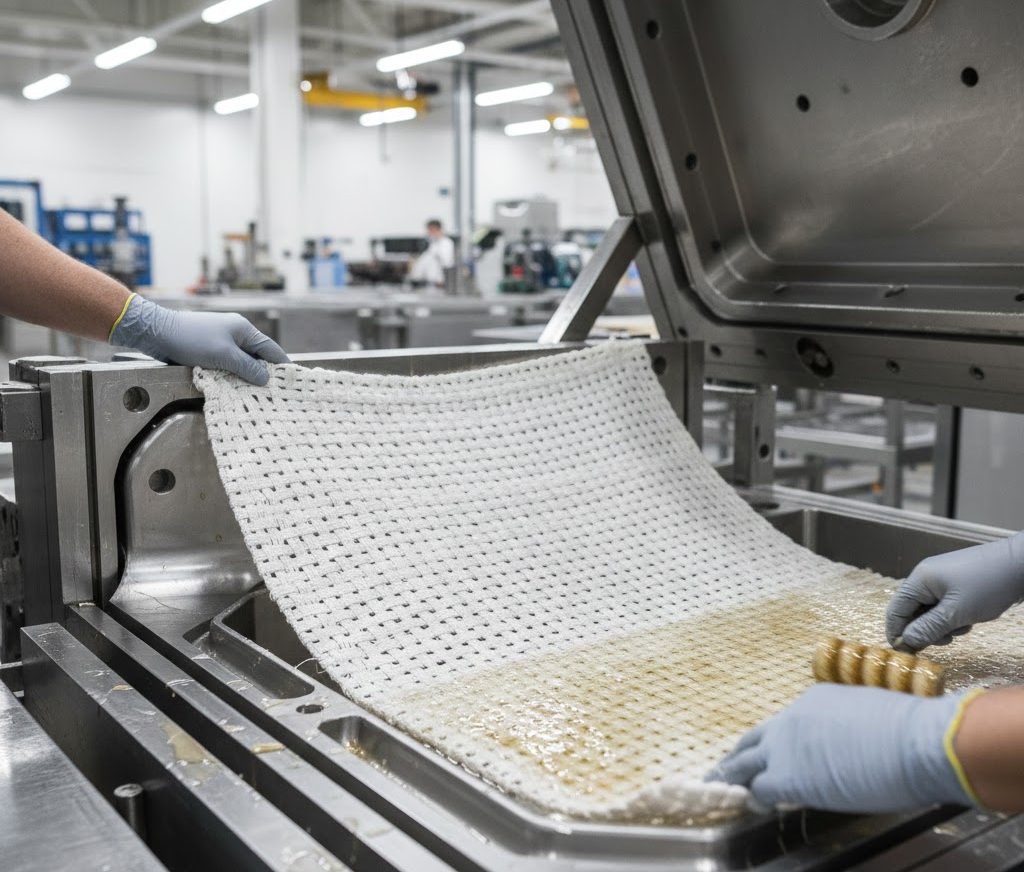
Vinyl ester systems are often selected when parts need improved toughness and chemical resistance compared to standard polyester. They’re commonly used for FRP components that must maintain performance in corrosive or wet environments—without sacrificing manufacturing efficiency.
- Durability under exposure: Helps maintain integrity in moisture and chemical contact conditions.
- Improved toughness: Better resistance to cracking from impact or cyclic loading.
- Process flexibility: Compatible with multiple molding methods depending on part size and volume.
See Research & Testing Support →
Cost Considerations
Vinyl ester resins typically sit between polyester and epoxy in performance and cost. They’re a strong value when corrosion resistance and toughness are priorities—especially for parts designed for long service life in demanding environments.